Industrial microbiome
- Funding: Commissioned research
- Period: 2016 – 2017
- Role: Master’s student
- Collaborator: D. Swarovski KG
Description
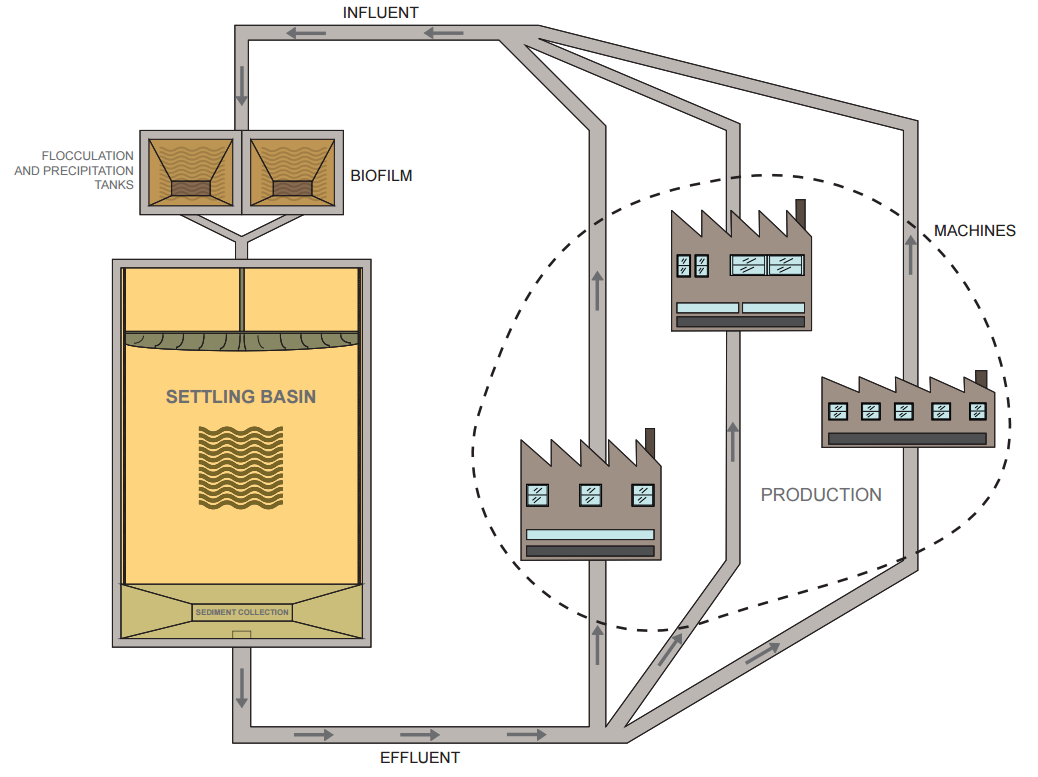
Cooling-lubrication circuits in industrial plants rely on biodegradable agents such as triethanolamine (TEA), whose bacterial breakdown forces costly replacement, poses health risks to workers, and is usually countered with biocides. In my master’s thesis, I characterized the microbiome of a large-scale (1,200 m³) cooling-liquid circuit and found Pseudomonas to be the dominant genus. Pseudomonas pseudoalcaligenes and Alcaligenes faecalis were isolated as TEA degraders, and growth experiments showed strong TEA degradation accompanied by bicine production. In lab-scale tests, a heat treatment of up to 15 min at 50 °C markedly reduced Pseudomonas and Alcaligenes growth, suggesting a cheap, easy-to-install alternative for controlling bacterial contamination.