Larval density drives thermogenesis and affects microbiota and substrate properties in black soldier fly trials
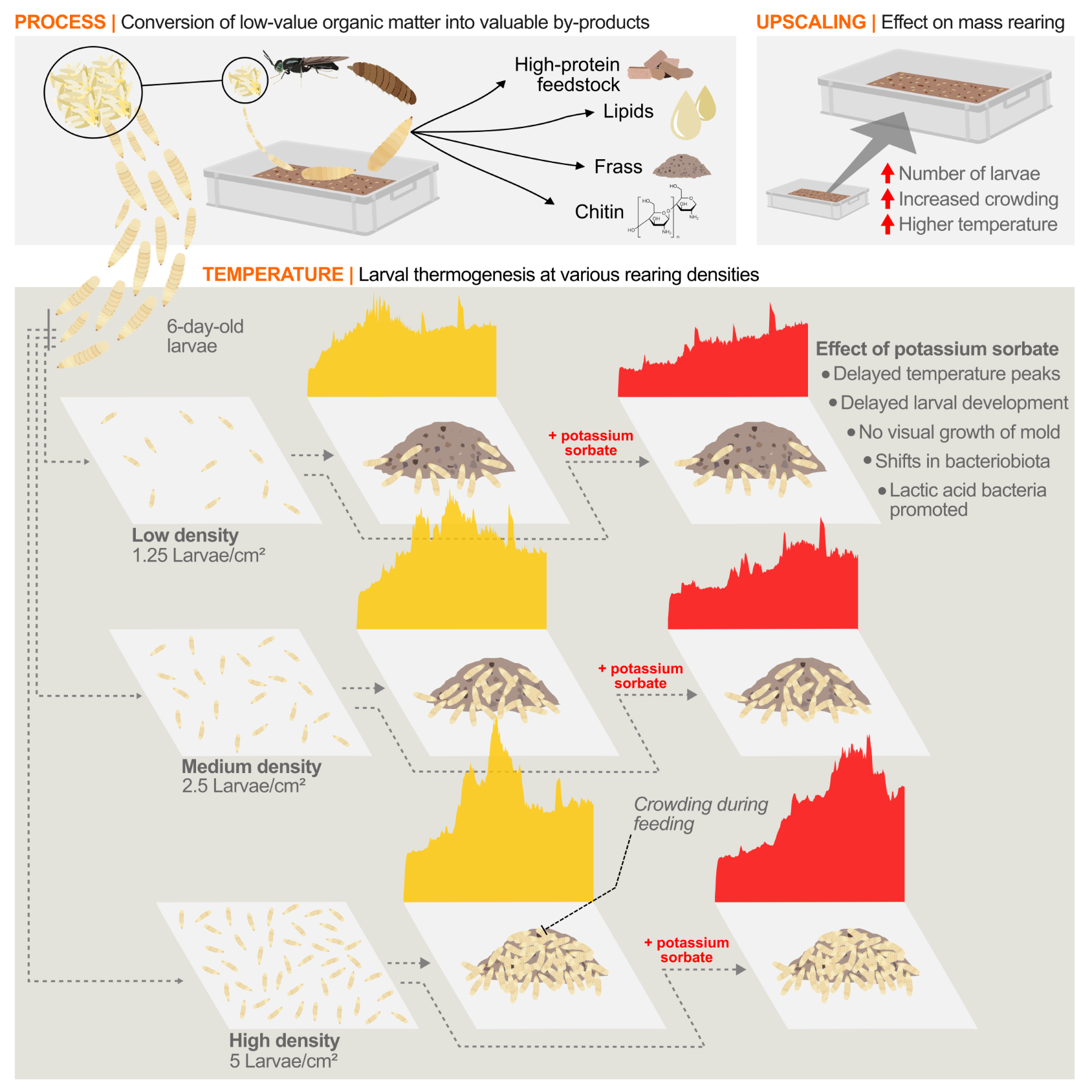
iScience 28(7), 112794 · Doubling larval density raised substrate temperature by 0.6–2.4 °C, and a preservative shifted the bacterial community toward lactic acid bacteria.
Black soldier fly larvae heat their substrate, and the heating grows with the number of larvae. In a laboratory study with four larval densities, we recorded temperature at high resolution and profiled the bacterial communities. Doubling the density raised the temperature by 0.6 to 2.4 °C depending on the treatment. Adding potassium sorbate increased Enterobacter, decreased Providencia and favoured lactic acid bacteria. Density also changed pH, water content, dry matter and volatile solids of the substrate. The results help to standardise rearing trials, where heat and microbes interact.