New publication: Lopes et al. (2026) Plant Growth Regul 106(1), 52
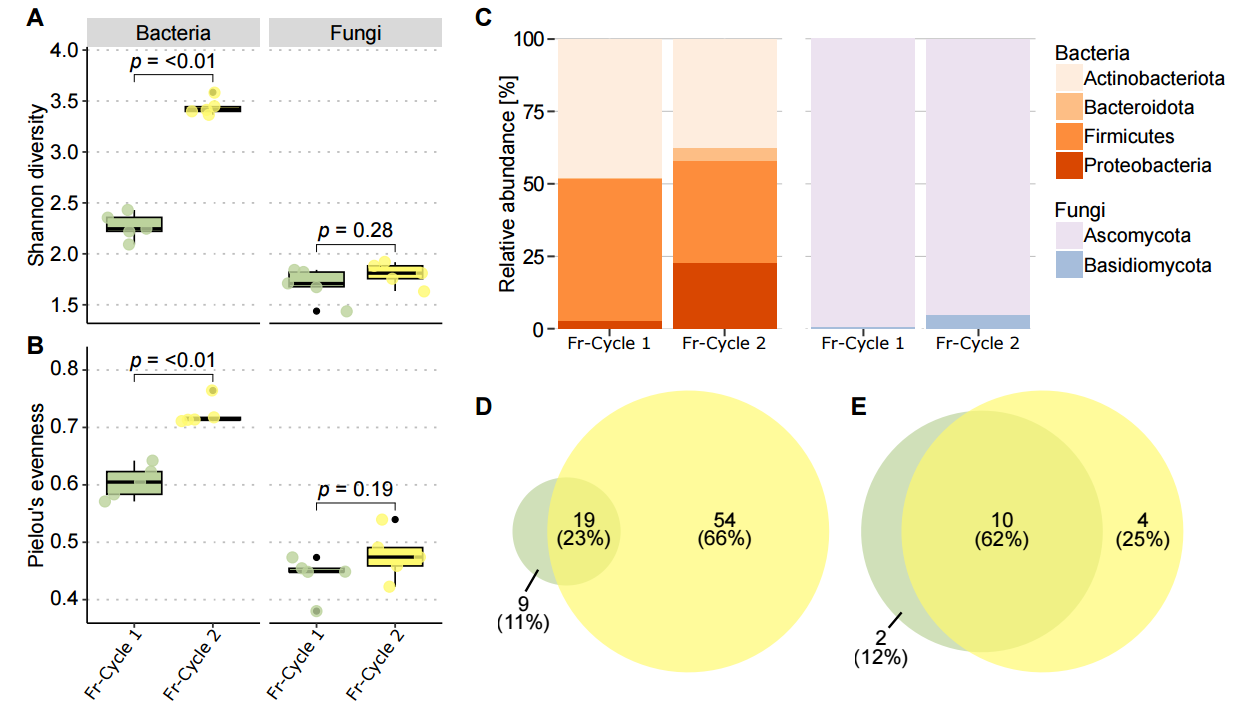
In this study, we show that black soldier fly larvae frass is not only a fertilizer but also a rich source of bioactive plant compounds, including multiple phytohormone classes such as cytokinins, auxins, ABA, salicylates, indoleamines and an ethylene precursor, detected at nano– to picomolar levels. Comparing fresh frass from one food-waste bioconversion cycle with frass that was recirculated through a second bioconversion cycle, we observed that recirculation reduced humic and fulvic acids and broadly lowered phytohormone concentrations, while significantly reshaping the bacterial community, with a higher relative abundance of Proteobacteria. Specific bacterial genera, including Proteus, Providencia and Morganella, were positively associated with key hormones, suggesting that the frass microbiome helps shape its hormonal profile and may underlie the biostimulant effects of black soldier fly frass in soil–plant systems.